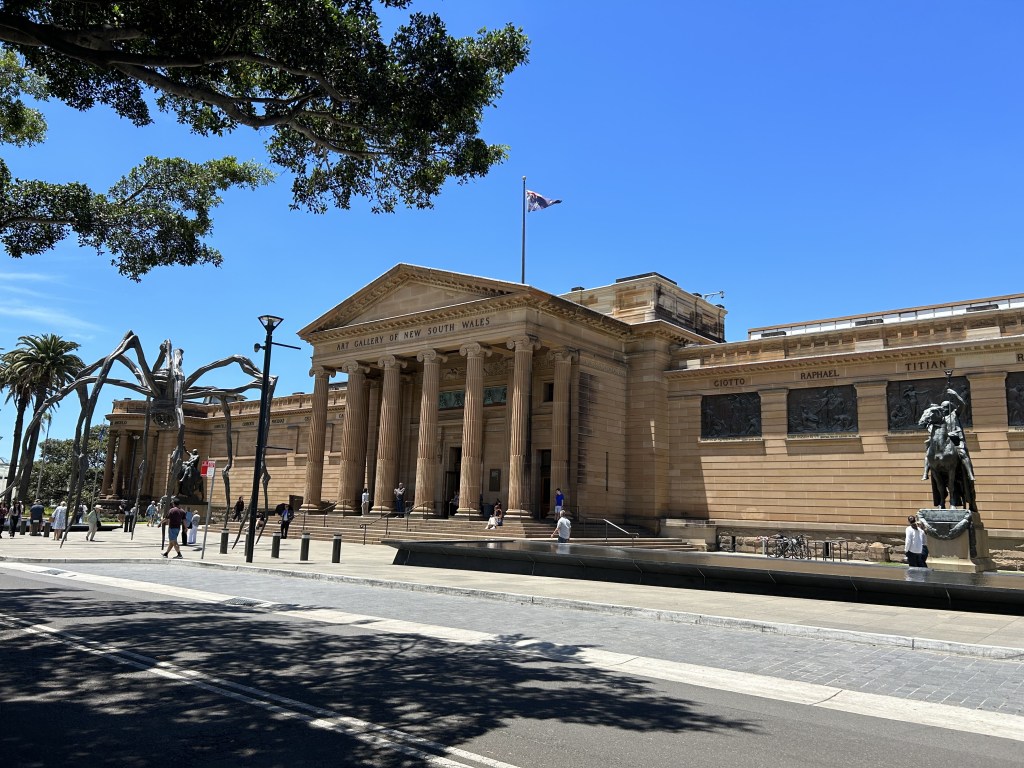
The entrance of the art gallery.
Rating: 4/5
One of the most famous museums in Australia is the Art Gallery of New South Wales. It is situated in a more secluded area of the city where you will walk along a tree-canopy road before arriving at it. I visited the west wing and the middle hall this time.
Due to the complexity of the building’s structure and the numerous collections, the curators arranged artworks primarily by art form and space. I am particularly interested in the abstract art in this visit. I went to the west wing of the building first. Two of the geometric artworks drew my attention because of their bold colours.
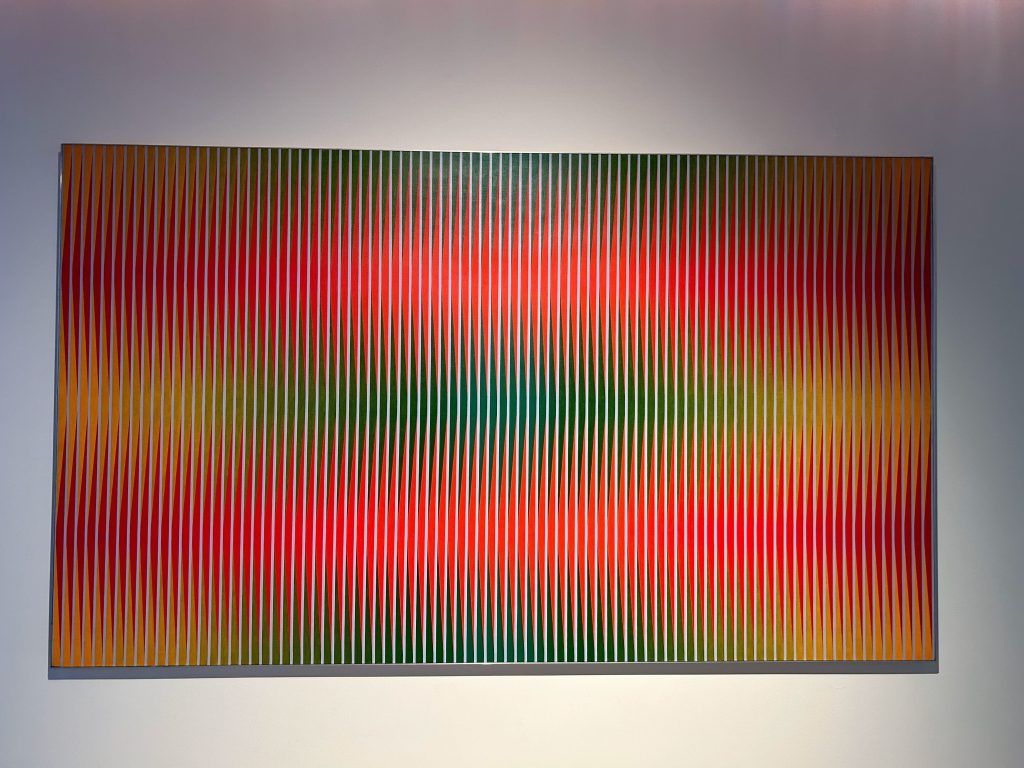
Lesley D. (1974) used four colours in three geometric forms to create an op art piece called Solstice.
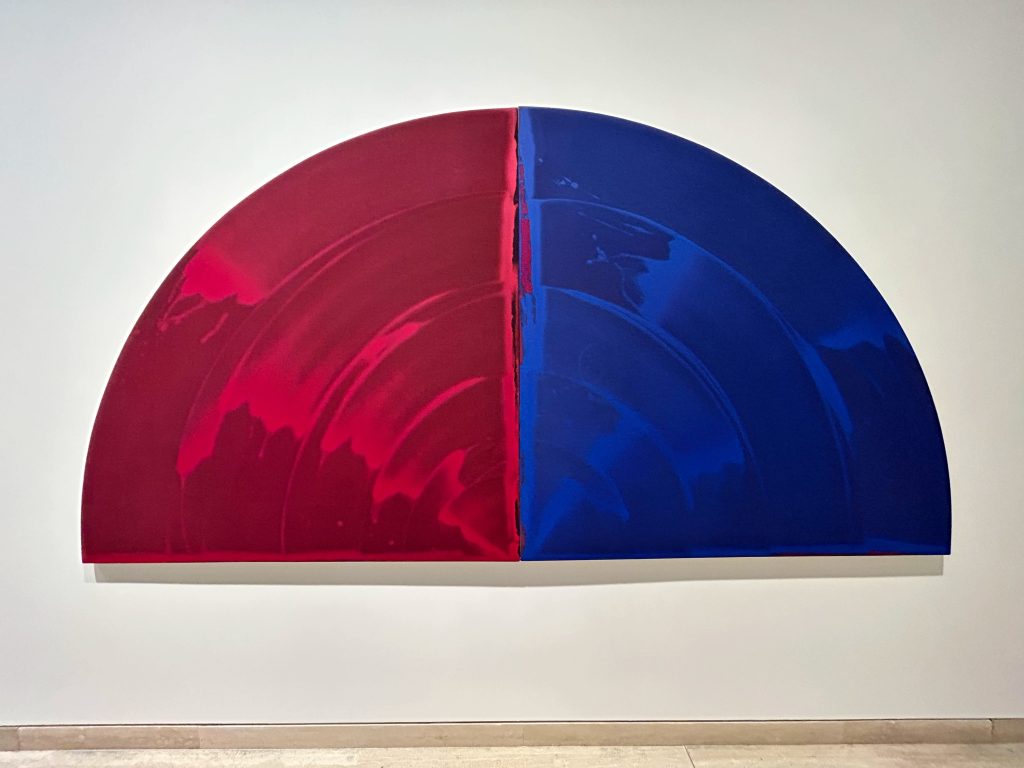
Gretchen A. (1983) created an art piece in two radii with red and blue colours. Interesting to note is the gradient of colour change within the radii.
The museum also celebrated several conceptual art artists.
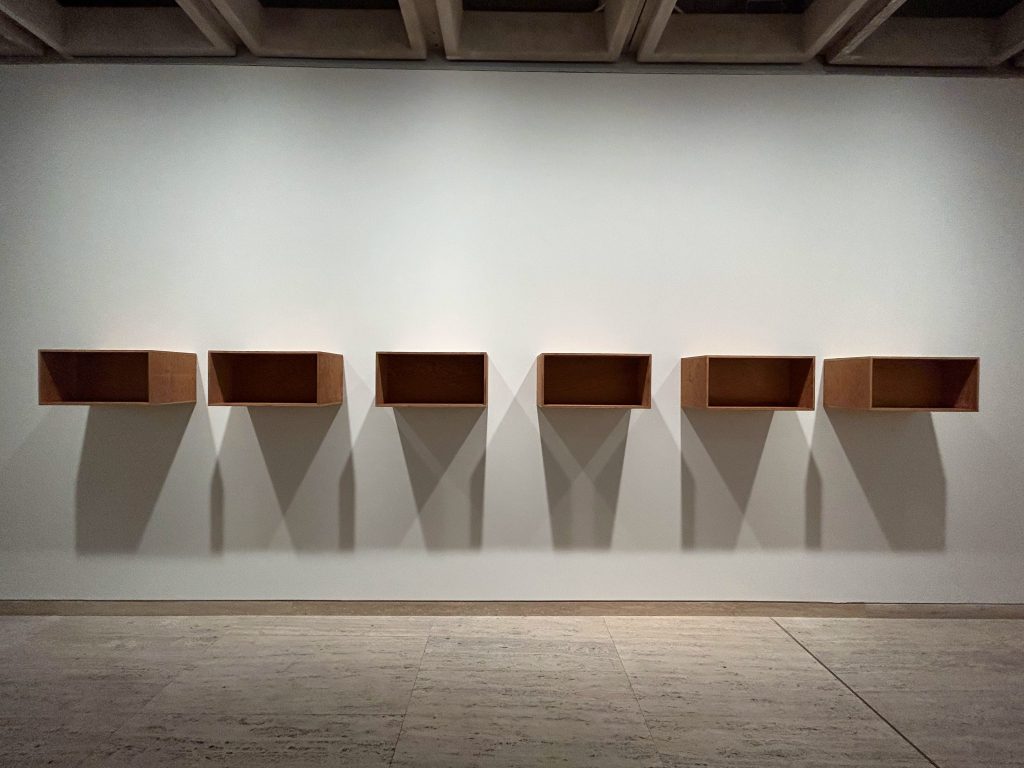
Donald J. (1975) used six plywood boxes to examine the relationships between space and volume. The overhead light also cast shadows on the wall, adding depth to the space.
Another conceptual artwork I saw was a drawing by Sol L. (1971). Using simple pencil lines, the artist divided the wall into eight sections.
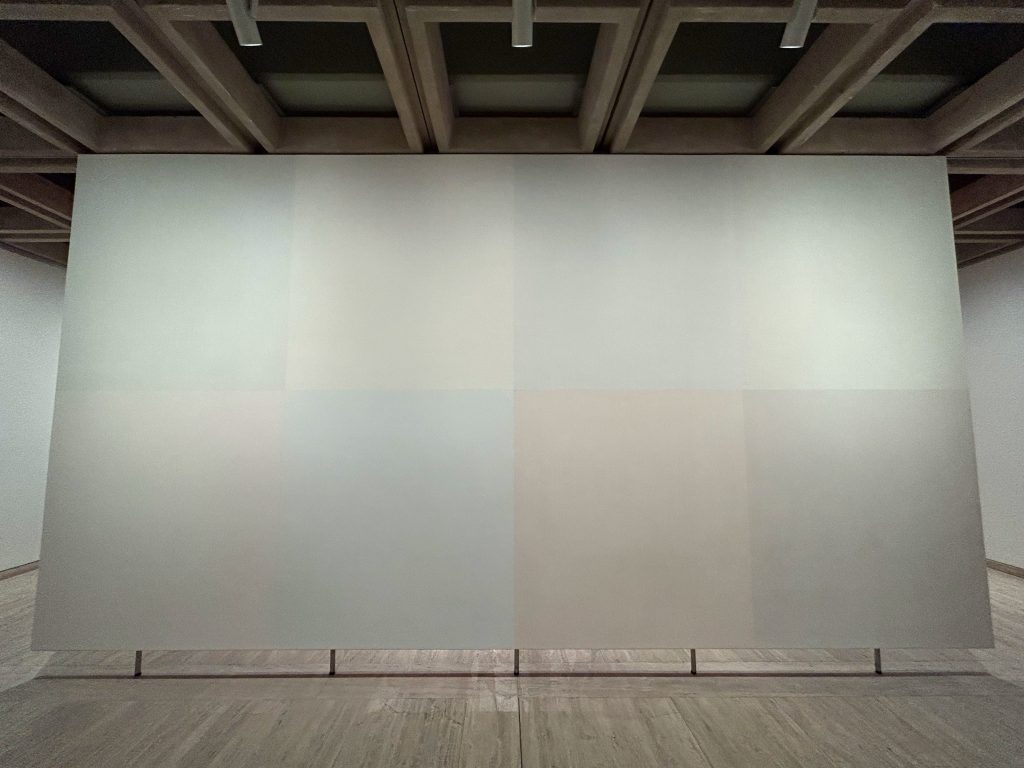
Walking past the gallery café and going upstairs leads to the later section of the middle hall. I also like the abstract art here.
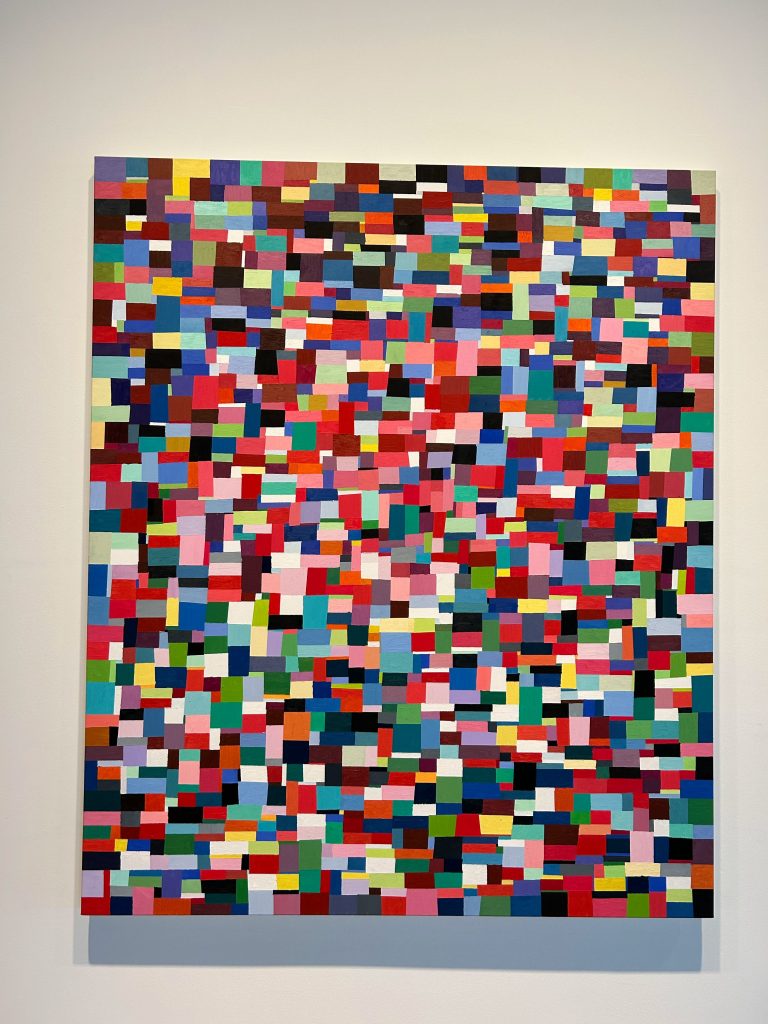
Melinda H. (1998) presented a vibrant oil painting that explored the relationship between shapes and colours.
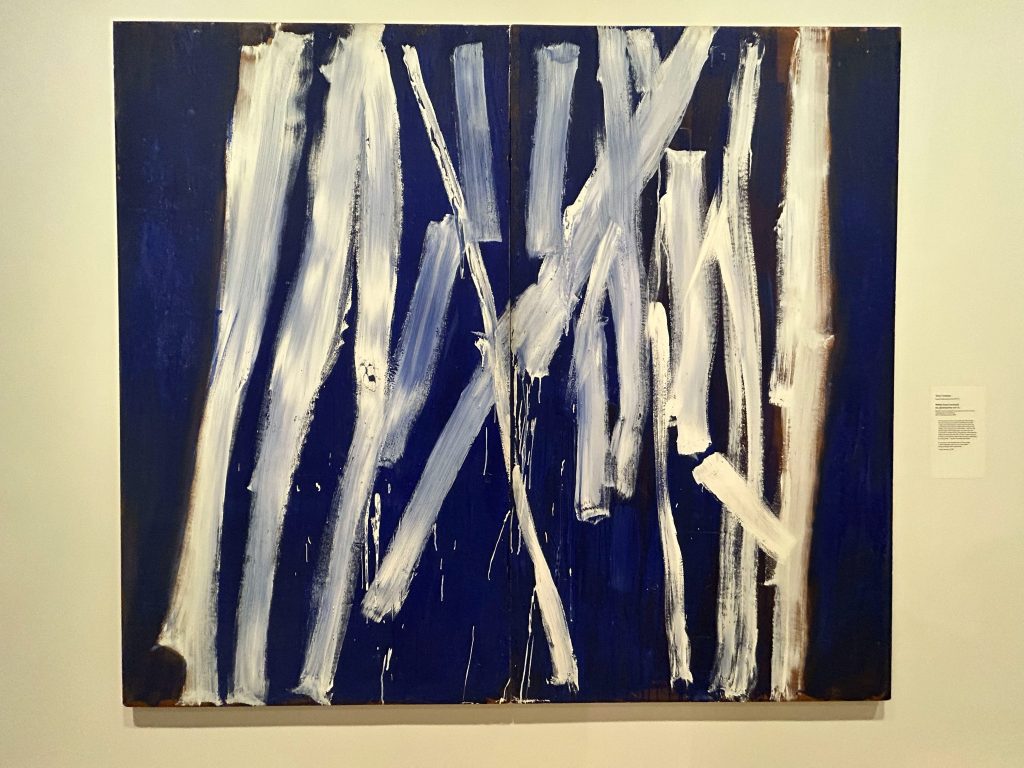
Tony T. (1973) used white brushstrokes of varying sizes on a blue background to express vitality and intensity.
Howard T. (1994) created a collage art with three rectangular canvases. He painted each canvas in grayscale, then added a rectangle in the middle. The canvases on both sides featured a centrepiece in the most intense grey, whereas the middle canvas showed a light grey rectangle. The rectangle in the middle, however, is the largest. The composition gave us multiple perspectives which explored the relationship between sizes, shapes and colours. It is a captivating artwork that sparks discussions.
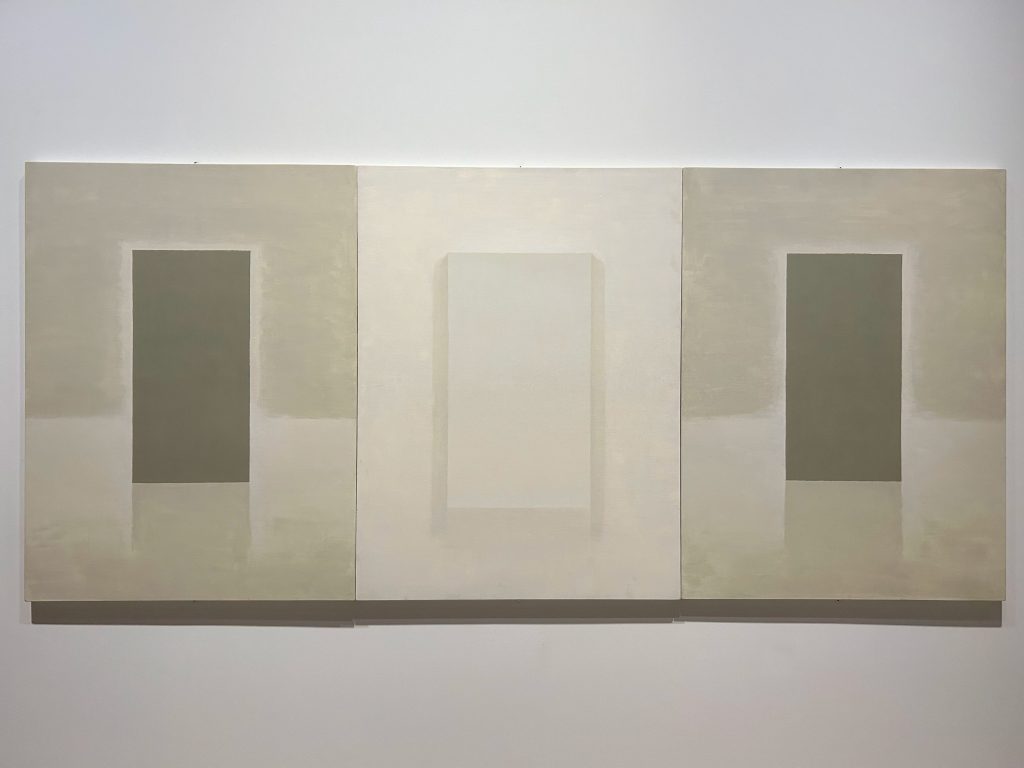
Still life with white figure by Howard T (1994).
Another type of abstract art I experienced is colour and light abstraction. It was placed in the middle hall. Frank H. (1968) displayed Rhodus, a metal ball on which coloured lights rotated. It used lights as a source of kinetic energy, exploring the theme of metaphysics.
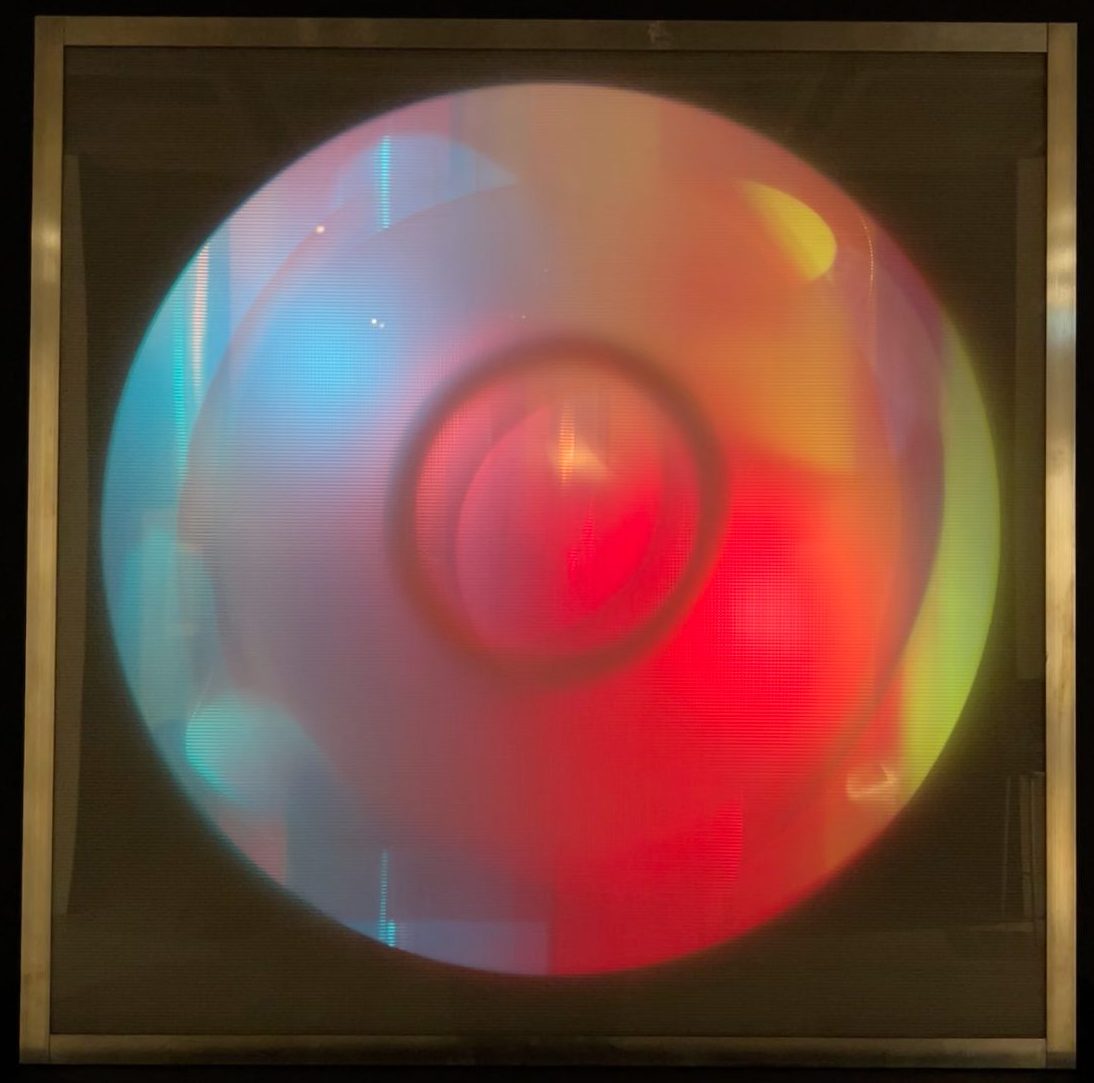
Rhodus by Frank H (1968).
The other interesting piece I saw in the hall was a three-part sculpture by Barbara H (1959). The artwork explored the themes of shape, dimension, and space.
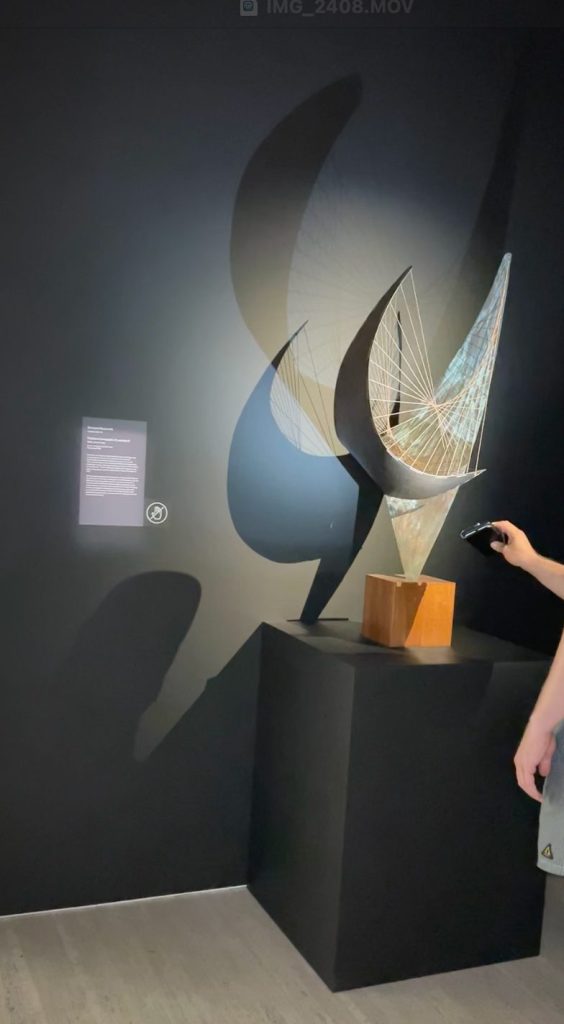
It has a huge collection, as indicated by its variety of art forms, mainly contemporary. There are installations, paintings, pottery, sculptures and digital art. The other sections I enjoyed visiting included still-life paintings, porcelain wares, sculptures, and oil paintings. The still-life paintings had a floral theme and were placed around the porcelain wares in a showroom. Most of the ceramics were contemporary artworks from different countries. There was an Australian porcelain clay section that paid tribute to local artists.
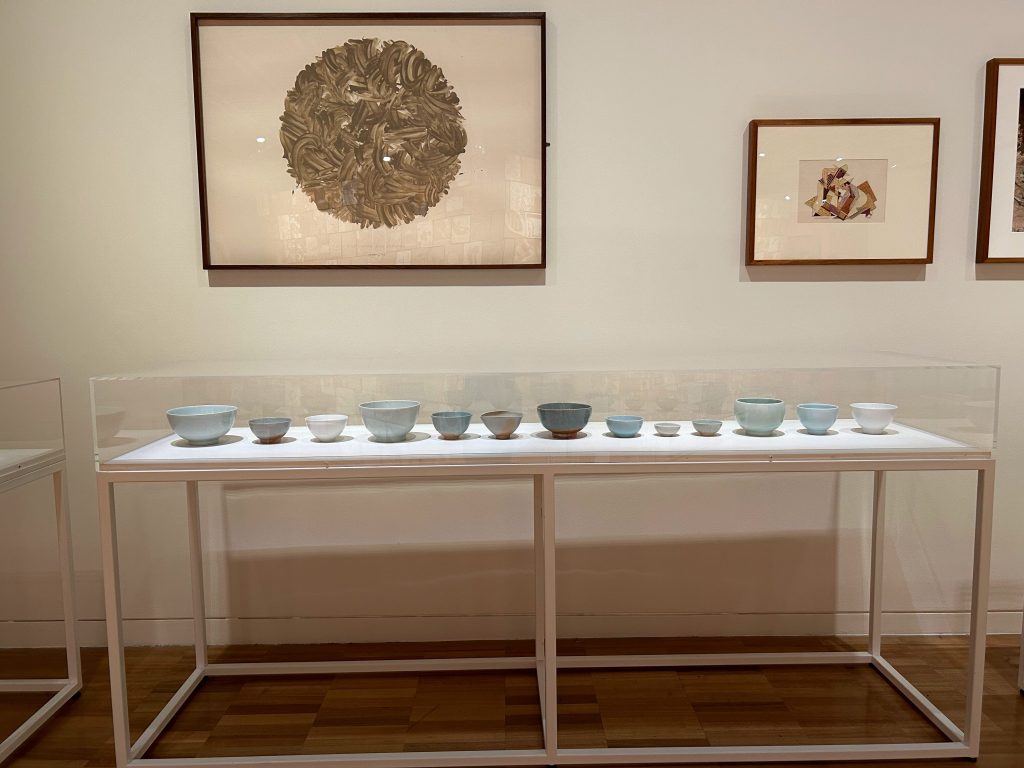
Items 3 to 16 of the porcelain section 27 by Steve H. (2000).
A bonus to my visit was a section of academic art housed on the upper floor of the middle hall. It included some contemporary works of oil paintings and sculptures.
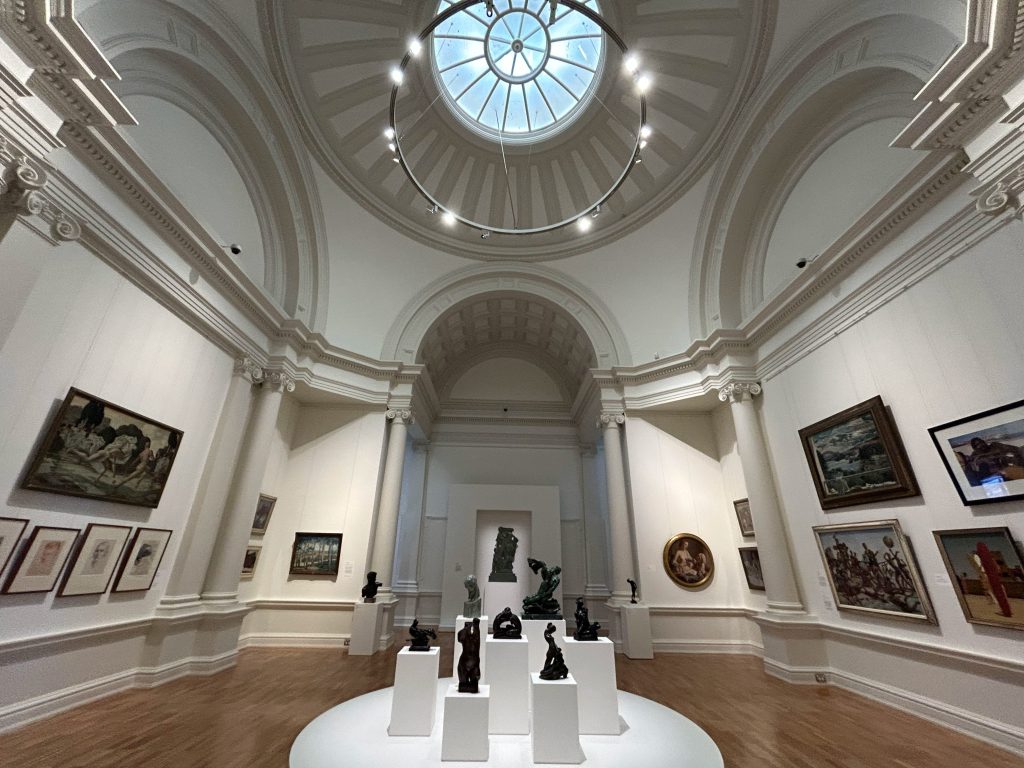
The upper hall of academic artworks.
At the end of my visit, I toured the gallery shop, which was easily one of my favourite times of a museum visit. The card collection, which featured great artworks by artists from different eras, was fascinating. I also liked the calendars with paintings from different artists.
The museum is accessible by bus, which is a 15-minute ride from the CBD. The weekends were crowded because it is one of the most popular spots for visitors. I visited on a Friday, which was full. I would recommend going there on other weekdays.


Leave a comment