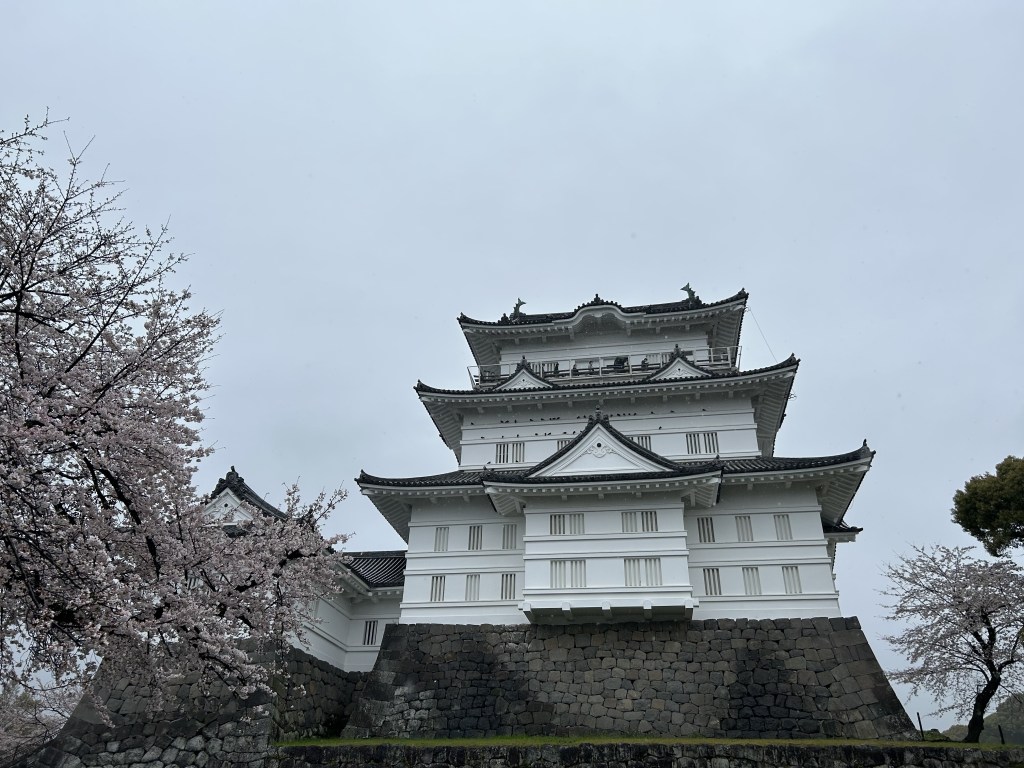
The front of Odawara Castle.
One of the major attractions in Japan is the palaces and monuments. I went to Osaka with my family during the Sakura blossom season, which added colour to the historic heritage. I visited Odawara Castle, which was listed among the top 10 castle towers (天守) in Japan.
Odawara Castle was built to honour Japanese gods, with spaces for placing statues and images of the gods, as well as for meditation. Most castles come with castle parks, where you can view unique Japanese garden styles and visit temples.


The castle area included a large pond (left), a bridge, and a temple (right).
After strolling along the pond and the castle park, I arrived at the castle. There were multiple steps ahead, which was the design of all the castle towers in Japan.
The staircase.

At the entrance, a digital art board displayed an illuminated handscroll illustrating the castle’s size and governing area. It was really big.

Odawarajo was guarded by an anointted clan, so the castle museum displayed mostly what the family used in the Edo period. As you can see, the Okubo clan mainly used black and red lacquer, with gold lines and patterns, on their cabinets and boxes. The distinct feature might have been influenced by the foreign policy of the time, which helped preserve their culture.


Lacquered cosmetic boxes (left and centre) and cups (right) from the Edo period.
Despite the non-open diplomacy, there is a universal appreciation for the environment. The castle also showcased artworks by appointed artists of the time, including Okamoto Shūki. He was renowned for his paintings of flowers and birds in vibrant colours. He painted one of these on a folding screen/sliding door showing the four seasons in the Odawara domain. What a splendid use of the four panel sections. I wonder what occasion it was used for.
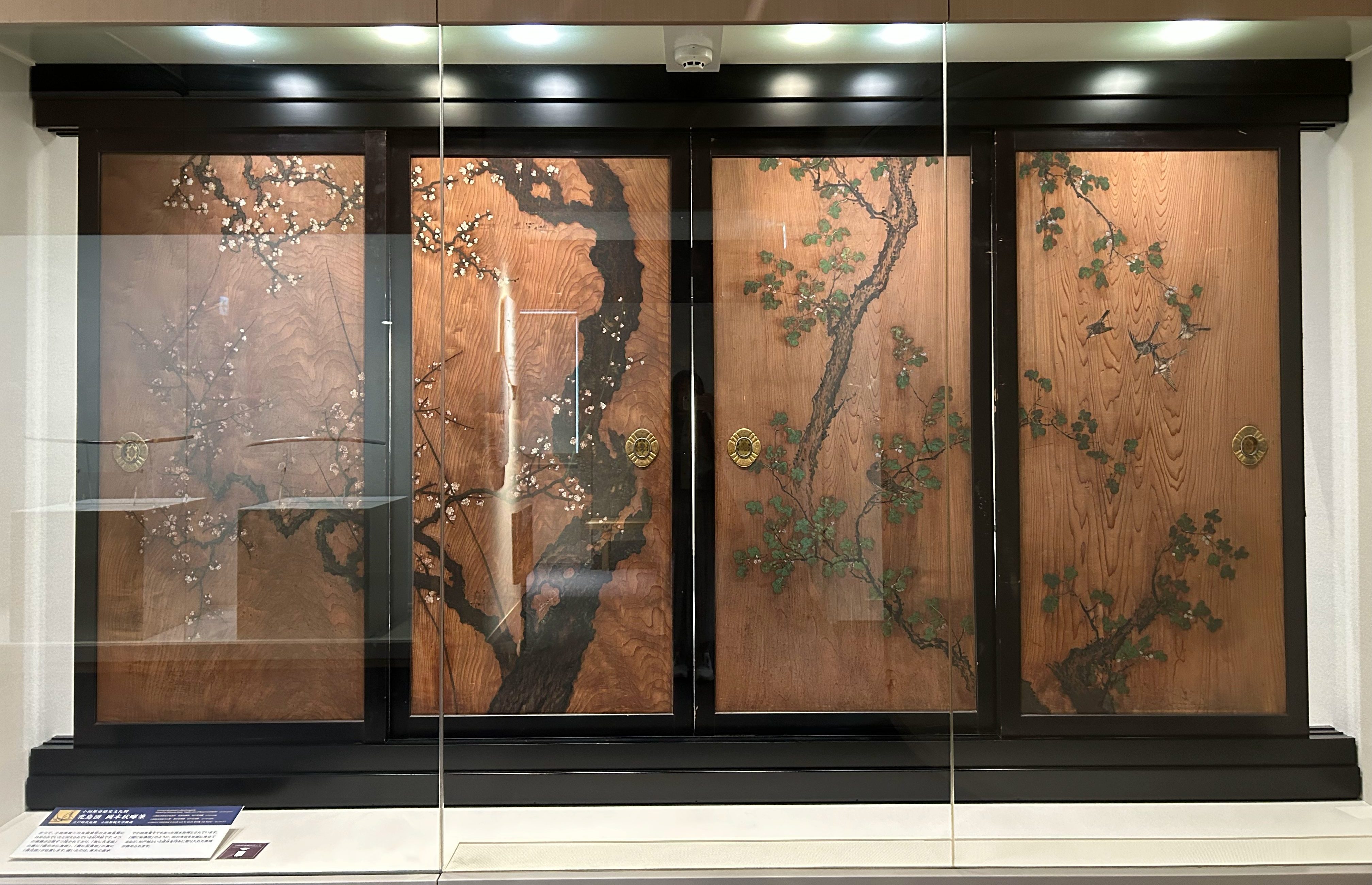
The folding screen/sliding door painted by Okamoto Shūki (1807-1862).
If you have a half-day free, you can visit Odawara Castle. It’s a big park with plenty of space for recreation. The castle itself is charming, especially with cherry blossom in season from March to April.


Leave a comment